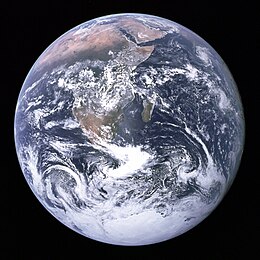
One of our legacies from the last century, which was dominated by two world wars and the cold war, is a sense of security that is defined almost exclusively in military terms. It so dominates Washington thinking that the U.S. foreign affairs budget of $701 billion in 2009 consisted of $661 billion for military purposes and $40 billion for foreign assistance and diplomatic programs.
But the situation in which we find ourselves pushes us to redefine security in twenty-first century terms. The time when military forces were the prime threat to security has faded into the past. The threats now are climate volatility, spreading water shortages, continuing population growth, spreading hunger, and failing states. The challenge is to devise new fiscal priorities that match these new security threats.
Douglas Alexander, former U.K. Secretary of State for International Development, put it well in 2007: “In the 20th century a country’s might was too often measured in what they could destroy. In the 21st century strength should be measured by what we can build together.”
The good news is that in the United States the concept of redefining security is now permeating not only various independent think tanks but the Pentagon itself. A number of studies have looked at threats to U.S. interests posed by climate change, population growth, water shortages, and food shortages-—key trends that contribute to political instability and lead to social collapse.
Although security is starting to be redefined in a conceptual sense, we have not redefined it in fiscal terms. The United States still has a huge military budget, committed to developing and manufacturing technologically sophisticated and costly weapon systems. Since there is no other heavily armed superpower, the United States is essentially in an arms race with itself. What if the next war is fought in cyberspace or with terrorist insurgents? Vast investments in conventional weapons systems will be of limited use.
The far-flung U.S. military establishment, including hundreds of military bases scattered around the world, will not save civilization. It belongs to another era. We can most effectively achieve our security goals by helping to expand food production, by filling the family planning gap, by building wind farms and solar power plants, and by building schools and clinics. More
Humanity is today playing in the major leagues. We are in a sink or swim situation. If we can keep this our one and only home planet habitable by mitigating and adapting to the changing climate, switching to alternative sources of energy such as solar, wind, geothermal, wave, ocean thermal and nuclear, sequester CO2 and provide the population with adequate supplies of water and food and bring the population under control, humanity may survive . Cooperation between states globally is rhe only answer. Editor
Sustainability equates to a sustainable global society founded on respect for nature, universal human rights, economic justice, and a culture of peace.
Showing posts with label waming. Show all posts
Thursday, May 31, 2012
Sunday, May 6, 2012
Te Case For Interdependence
The physicist-turned international environmental activist Dr. Vandana Shiva gave the opening keynote address at the Living Future “unconference” on May 2 in Portland, Oregon. Shiva is the author of Earth Democracy and Water Wars, among other books, including Soil Not Oil: Environmental Justice in an Age of Climate Crisis (South End Press, 2008). This book posits that the triple threat of climate change, peak oil, the food and agrarian crisis, together, represent a “triple opportunity”—but only if we change our thinking and our systems.
She referenced her attempts to talk to naysayers at the highest level, scientists and thinkers who claim that traditional agricultural methods and economic systems will never be sufficient to feed the world’s population. When she queries them about the “externalities” and unintended consequences of their monoculture solutions, they say, about water or soil health or other matters: “that’s not my department,” or “that wasn’t part of my study.” But as Shiva points out, “If you want to build a living future, everything is your department.”
Her biggest complaint about the current approach, and the artificial boundaries that she sees as part of capitalism, is the persistent devaluation of the work of the planet and of women. In particular, she pointed to the economic valuation system that had created a false production boundary: “If producers consume what they produce—such as food in a family or community garden—they are, somehow, not producing anything. In other words, production takes place only when commodification begins, but not before. This results, perversely, in a system that produces less and less while pretending to produce more and more. We are in a situation where we are using increasingly more units of energy to produce fewer and fewer units of food.” More
The theme of this year’s event, put on by the International Living Future Institute, is Women Reshaping the World, and Shiva opened her remarks with a reference to the “feminine principle” of Shakti, the concept of feminine creative power in Hinduism, which can also be present in males, and which means “to be able” and refers to empowerment.
“The vocabulary is shifting,” she said. “And it should. Words signify imagination and we need a shift from dominance because it is failing us and the planet.” The mistake she sees is a system of artificial boundaries. These, she notes, are part of the unfortunate, destructive, and hubristic elevation of man over nature. “We need to give up the hubris of that notion and embrace interdependence. We may be in the anthropocene, but we can make this cooperative, creative anthropocene, rather than an age of dominance.”She referenced her attempts to talk to naysayers at the highest level, scientists and thinkers who claim that traditional agricultural methods and economic systems will never be sufficient to feed the world’s population. When she queries them about the “externalities” and unintended consequences of their monoculture solutions, they say, about water or soil health or other matters: “that’s not my department,” or “that wasn’t part of my study.” But as Shiva points out, “If you want to build a living future, everything is your department.”
Her biggest complaint about the current approach, and the artificial boundaries that she sees as part of capitalism, is the persistent devaluation of the work of the planet and of women. In particular, she pointed to the economic valuation system that had created a false production boundary: “If producers consume what they produce—such as food in a family or community garden—they are, somehow, not producing anything. In other words, production takes place only when commodification begins, but not before. This results, perversely, in a system that produces less and less while pretending to produce more and more. We are in a situation where we are using increasingly more units of energy to produce fewer and fewer units of food.” More
Subscribe to:
Posts (Atom)