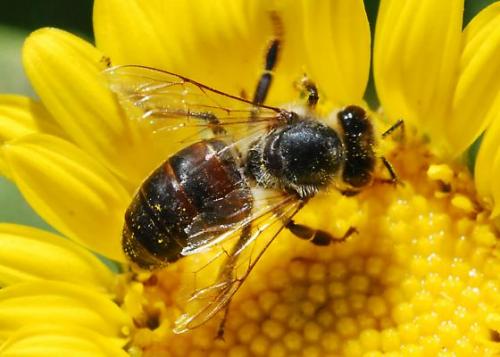
Showing posts with label bees. Show all posts

Monday, May 27, 2013

Russia Warns Obama: Global War Over “Bee Apocalypse” Coming Soon

The shocking minutes relating to President Putin’s meeting this past week with US Secretary of State John Kerry reveal the Russian leaders “extreme outrage” over the Obama regimes continued protection of global seed and plant bio-genetic giants Syngenta and Monsanto in the face of a growing “bee apocalypse” that the Kremlin warns “will most certainly” lead to world war.

According to these minutes, released in the Kremlin today by the Ministry of Natural Resources and Environment of the Russian Federation (MNRE), Putin was so incensed over the Obama regimes refusal to discuss this grave matter that he refused for three hours to even meet with Kerry, who had traveled to Moscow on a scheduled diplomatic mission, but then relented so as to not cause an even greater rift between these two nations.

At the center of this dispute between Russia and the US, this MNRE report says, is the “undisputed evidence” that a class of neuro-active insecticides chemically related to nicotine, known as neonicotinoids, are destroying our planets bee population, and which if left unchecked could destroy our world’s ability to grow enough food to feed its population.

So grave has this situation become, the MNRE reports, the full European Commission (EC) this past week instituted a two-year precautionary ban (set to begin on 1 December 2013) on these “bee killing” pesticidesfollowing the lead of Switzerland, France, Italy, Russia, Slovenia and Ukraine, all of whom had previously banned these most dangerous of genetically altered organisms from being used on the continent.

Two of the most feared neonicotinoids being banned are Actara and Cruiser made by the Swiss global bio-tech seed and pesticide giant Syngenta AG which employs over 26,000 people in over 90 countries and ranks third in total global sales in the commercial agricultural seeds market.

Important to note, this report says, is that Syngenta, along with bio-tech giants Monsanto, Bayer, Dow and DuPont, now control nearly 100% of the global market for genetically modified pesticides, plants and seeds.

Also to note about Syngenta, this report continues, is that in 2012 it was criminally charged in Germany for concealing the fact that its genetically modified corn killed cattle, and settled a class-action lawsuit in the US for $105 million after it was discovered they had contaminated the drinking supply of some 52 million Americans in more than 2,000 water districts with its “gender-bending” herbicide Atrazine.

To how staggeringly frightful this situation is, the MNRE says, can be seen in the report issued this past March by the American Bird Conservancy (ABC) wherein they warned our whole planet is in danger, and as we can, in part, read:

“As part of a study on impacts from the world’s most widely used class of insecticides, nicotine-like chemicals called neonicotinoids, American Bird Conservancy (ABC) has called for a ban on their use as seed treatments and for the suspension of all applications pending an independent review of the products’ effects on birds, terrestrial and aquatic invertebrates, and other wildlife.

“It is clear that these chemicals have the potential to affect entire food chains. The environmental persistence of the neonicotinoids, their propensity for runoff and for groundwater infiltration, and their cumulative and largely irreversible mode of action in invertebrates raise significant environmental concerns,” said Cynthia Palmer, co-author of the report and Pesticides Program Manager for ABC, one of the nation’s leading bird conservation organizations.

ABC commissioned world renowned environmental toxicologist Dr. Pierre Mineau to conduct the research. The 100-page report, “The Impact of the Nation’s Most Widely Used Insecticides on Birds,” reviews 200 studies on neonicotinoids including industry research obtained through the US Freedom of Information Act. The report evaluates the toxicological risk to birds and aquatic systems and includes extensive comparisons with the older pesticides that the neonicotinoids have replaced. The assessment concludes that the neonicotinoids are lethal to birds and to the aquatic systems on which they depend.

“A single corn kernel coated with a neonicotinoid can kill a songbird,” Palmer said. “Even a tiny grain of wheat or canola treated with the oldest neonicotinoid — called imidacloprid — can fatally poison a bird. And as little as 1/10th of a neonicotinoid-coated corn seed per day during egg-laying season is all that is needed to affect reproduction.”

The new report concludes that neonicotinoid contamination levels in both surface- and ground water in the United States and around the world are already beyond the threshold found to kill many aquatic invertebrates.” More


Monday, May 20, 2013

If you can't trust your food should you trust your government?

A Grassroots Movement called March Against Monsanto is Going Global – Taking Back Control of Food Production Starting May 25th 2013

One of the most important issues facing people all over the world is Food – the production, safety and availability of Food. Gone are the days when one could purchase either seeds or food without the strong possibility that agenetic modification was made to the seeds or food they purchased. Seed Cultivation is increasingly falling under the corporate ownership of Monsanto – the details of which will astound the reader.

What is happening globally is a complete takeover of seed cultivation and food production, threatening the very existence of what was once genetically pure seed stock and food, having been grown and selected in a natural process of allowing Nature to modify the plant or organism and then selecting the best to save, distribute and grow.

Due to the disastrous experimentation and corporate legislation that has occurred over the last few decades, the threat to humanities ability to consume “Natural Food” also referred to as Heirloom Seed, is under such threat, that a grassroots movement is now taking shape called March Against Monsanto which begins May 25th, 2013 and is taking on a global dimension. More


Monday, March 4, 2013

Opposition crops up to GMO foods in Hawaii

Lihue, Hawaii - Famous the world over as a tropical vacation spot, the Hawaiian Islands are less well-known as ground zero in the debate over genetically modified organisms (GMO), the open-air testing of pesticide-resistant crops and the ethics of patenting genetically engineered (GE) plant life.

Hawaii is home to one of the world’s greatest concentrations of GMO research fields by five of the largest biotechnology and chemical companies: Monsanto, Dow AgroSciences, Syngenta, DuPont Pioneer and BASF.

These transnational corporations prefer Hawaii for growing and testing GE crops because of its abundant sunshine, rainfall and year-round growing climate. GMO opponents say the companies also enjoy Hawaii’s isolation, largely removed from the public eye.

Yet these companies, which have been in Hawaii for decades, are now facing increasing opposition from residents concerned about GMOs, the health and environmental impacts of pesticides and what they see as a lack of oversight and transparency.

When the Hawaii state legislature convened this January, on its schedule were a dozen bills seeking to regulate, limit or ban the sale and import of GMOs. This month, two of the bills were approved by committee, an important step towards becoming law.

Labelling dispute

Hawaii's House Bill 174 calls for labelling imported genetically engineered fresh produce. If passed, Hawaii would be the first US state to require labelling of GMO foods.

Unlike Japan, China, Russia, the European Union and dozens of other countries, the US does not require GMO foods to be labelled. Opponents of labelling include Alicia Maluafiti, executive director of the Hawaii Crop Improvement Association, a trade association representing biotech companies. She says the burden of labelling should be on foods that do not include GMOs.

Scott McFarland, government and public affairs leader with Dow AgroSciences in Hawaii, says his company "actually has no position on food labelling”. He characterises Dow’s work in Hawaii as “parent seed expansion”, developing commercial seeds to be exported outside the US.

Shiva's visit

Hawaii's fight over GMO foods has garnered worldwide attention. Last month internationally renowned environmentalist and philosopher Dr Vandana Shiva travelled from New Delhi to Hawaii to speak to anti-GMO activists, community groups and lawmakers who are increasingly concerned about the role of GMOs in the US' 50th state. "I think your island is truth-speaking to the world that GMOs are an extension of pesticides, not a substitute or alternative to it,” she told an audience on the island of Kauai.

Shiva is best known for her opposition to GMO crops, globalisation, the privatisation of land and water and what she describes as a "war against the earth.”

The 1993 recipient of the Right Livelihood Award (also known as the "Alternative Nobel Prize") and founder of Navdanya, a programme dedicated to protecting traditional crops through seed banking, Shiva was invited to the islands by Hawaii SEED, a coalition of grassroots groups promoting alternatives to GE farming.

"[Hawaii] has become like a nerve centre for the expansion of destruction,” Shiva said. "GMOs are not a safe alternative to poisons, they are pushed by a poison industry to increase the sale of both the poisons and simultaneously monopolise the seed."

Evoking the 1984 Bhopal, India disaster when a chemical leak from a Union Carbide plant (now a subsidiary of Dow Chemical) killed and injured tens of thousands, Shiva - who was trained as a physicist - embarked on a connect-the-dots tour of how she says yesterday's war chemicals manufacturers reinvented themselves as the agrochemical industry, before mutating into the biotech industry.

"War and agriculture came together when the chemicals that were produced for warfare lost their market - and the industry organised itself to sell those chemicals as agrochemicals,” Shiva said. As gene splicing techniques advanced, she said corporations saw GE crops as a means to claim creative and inventive rights, patent seeds and collect royalties.

Joining Shiva were community activist Walter Ritte and public interest lawyer Andrew Kimbrell, executive director of the Center for Food Safety in Washington.

In the 1970s Ritte was at the centre of direct action against the US military which, at the time, was using the Hawaiian island of Kahoolawe as a bombing range. Eventually the movement was successful in ending weapons testing on the island. Today Ritte focuses his activism on stopping GMO farming.

Kimbrell told the audience that genetic engineering at its essence violates nature's most fundamental codes. "They're treating animals and seed as though they're machines and using machine value on the life forms. That's why we call it genetic engineering.”

Citing a Union of Concerned Scientists 2009 report entitled Failure to Yield, Kimbrell spoke of what he called "GMO myths” and said that, at a minimum, GMOs should be labelled. More


Saturday, February 23, 2013

Monsanto Conquest Attempt Meets Aztec Resistance

Monsanto has a map for conquering the world and Mexico is in the center of it.

For nearly two decades the transnational corporation that manufactures the pesticides used across the planet has been trying to take over the global seed market with genetically modified (GM) seed. If successful, most of the food we grow and eat would have to be purchased annually as seed from Monsanto. The mutant plants would grow up addicted to Monsanto herbicides. Local varieties would disappear, and in their place standardized, genetically modified food–doused with chemicals–would fill supermarket shelves and corner stores.

More than sixty thousand farmers and supporters from workers’ and environmental organizations marched through Mexico City on Jan. 31 to avoid this fate. It was one of the largest mobilizations to date to reject the Monsanto game plan, and it’s no coincidence that it took place in the heart of the Aztec Empire.

Olegario Carrillo, president of Mexican small farm organization UNORCA, addressed the crowd in the central plaza, “During the last 30 years, successive governments have tried to wipe us out. They’ve promoted measures to take away our lands, our water, our seeds, plant and animal varieties, traditional knowledge, markets. But we refuse to disappear.”

“For peasant farmers, GMOs represent looting and control,” he stated.

With tens of thousands of people shouting “No genetically modified corn in Mexico!” and “Monsanto get out!”, the march showed the muscle of an unusual grassroots movement to protect small farmers and consumers. It also revealed the remarkable success of decades of public education and organizing on an issue that Monsanto and other major biotech firms hoped would slide under the radar of the people most affected by it.

Monsanto–along with Pioneer, Dow and other chemical/biotech firms– has been pushing hard to take over production of the world’s third major staple crop: corn. Small farmers in the U.S. have long experienced the pressure exerted to move them out of the way. Monsanto predicts that its corn seed will be planted on 96 million acres in the United States this year. But the key to its plans to conquer the market lies south of the border.

The powerful corporation, the largest seed seller in the world, desperately wants permission for unrestricted planting of its GM corn in Mexico. If GM corn is planted in Mexico, it will accelerate the transfer of acreage and water rights from small farmers to corporate GM corn cultivation, thus transferring control of the national food supply as well. Widespread open planting of GM corn will lead to contamination of native varieties. This is a scientific fact. Mexico has already detected many native cornfields contaminated by GM corn during the period when open planting was prohibited—a strong indication of the impossibility of controlling open pollination between native and GM varieties.

This has huge implications. Mexico is the center of origin of corn, and the home of hundreds of varieties developed by indigenous communities over centuries. To lose in situ preservation of these varieties is to lose a wealth of agro-diversity that has major importance for sustainable food production, and to eventually become dependent on Monsanto and other large corporations to feed ourselves.

The Mexican government first legalized GM plantings through what has come to be known as the 2005 “Monsanto Law”, which the farmers are demanding be revoked. It then began issuing permits, first for experimental plantings. Having passed that phase, Monsanto has now requested permits to begin all-out commercial production. It has filed to sow some 700,000 hectares of genetically modified corn in the state of Sinaloa alone. More


Thursday, June 7, 2012

Scientists Fear Global Ecological Collapse Once 50% of the Natural Landscape is Gone

I love me some solid, science-backed doom and gloom—and good thing! It's in such ample supply. A new study from 22 respected biologists and ecologists says that the world may be about to undergo a "state shift" that will trigger huge environmental transformations, mass extinctions, and ecological collapse. Oh, it will probably be an existential threat to humanity too.

So, New York Times, riddle me this:

Humans have already converted about 43 percent of the ice-free land surface of the planet to uses like raising crops and livestock and building cities, the scientists said. Studies on a smaller scale have suggested that when more than 50 percent of a natural landscape is lost, the ecological web can collapse. The new paper essentially asks, what are the chances that will prove true for the planet as a whole?
And the answer is ... scientists don't really know for sure, but they're scared shitless.James H. Brown, a macroecologist at the University of New Mexico, said in an interview that this “scares the hell out of me. We’ve created this enormous bubble of population and economy. If you try to get the good data and do the arithmetic, it’s just unsustainable. It’s either got to be deflated gently, or it’s going to burst.”

Guess which option humanity is leaning towards? (Hint: not deflate gently.) It's yet another mostly incomprehensible tipping point to look out for on the horizon—since we're likely to keep developing the natural landscape at roughly the same rate (if not faster) well into the future, we should hit that 50 percent mark pronto. Then I guess we just do what we seem to do best these days: cross our fingers and hope that the scientists are wrong. More


Thursday, April 26, 2012

Save the Bees -Avaaz

Posted: 24 April 2012

Quietly, globally, billions of bees are dying, threatening our crops and food. But if Bayer stops selling one group of pesticides, we could save bees from extinction.

Four European countries have begun banning these poisons, and some bee populations are already recovering. But Bayer, the largest producer of neonicotinoids, has lobbied hard to keep them on the market. Now, massive global pressure from Avaaz and others has forced them to consider the facts, and in 24 hours, Bayer shareholders will vote on a motion that could stop these toxic chemicals. Let’s all act now and shame the shareholders to stop killing bees.

The pressure is working, and this is our best chance to save the bees. Sign the urgent petition and send this to everyone -- let's reach half a million signers and deliver it directly to shareholders tomorrow in Germany! Click Here