Showing posts with label SIDS. Show all posts

Sunday, December 7, 2014

Announcing “Disastersand Ecosystems: Resilience in a Changing Climate”

Announcing “Disastersand Ecosystems: Resilience in a Changing Climate”, a new Massive Open OnlineCourse (MOOC) to be launched on 12 January, 2015

What we all know is that disasters are increasing worldwide. Population growth,environmental degradation and climate change will likely exacerbate disasterimpacts in many regions of the world. What role do ecosystems play in reducingdisaster risks and adapting to climate change? This is the topic of an exciting new Massive Open Online Course thatwill go live in January 2015. It was developedjointly by the United Nations Environment Programme (UNEP), the Center for NaturalResources and Development (CNRD) and the Cologne University of Applied Sciences(CUAS), Germany. This is UNEP’s first MOOC, developed through its engagement with universities worldwide including the Global Universities Partnership on Environment for Sustainability (GUPES).

The MOOC covers a broad range of topics from disastermanagement, climate change, ecosystem management and community resilience. Howthese issues are linked and how well-managed ecosystems enhance resilience to naturaldisasters and climate change impacts are the core theme of the course.
The MOOC is designed at two levels: the leadership track, with the first 6 units providing generalintroduction to the fundamental concepts, which is suitable for people from allbackgrounds who wish to have a basic undertaking of the topic. The second level, or expert track comprises 15 units with more in depth learning on thevarious tools of ecosystem-based disaster risk reduction and climate changeadaptation.
The course is delivered by both scientists and practitioners.In addition there are guest lectures from global leaders and experts, such as Achim Steiner, the Executive Director of the United Nations Environment Programme, Julia Marton-Lefèvre, former Director General of the International Union for the Conservationof Nature (IUCN), Rajendra Pachauri of Teri University and Margareta Wahlströmof the UN International Strategy on Disaster Reduction (UNISDR).

Students will have the opportunity to enhance their knowledgethrough quizzes, real life and fictitious problem-solving exercises, additionalreading materials, videos and a discussion forum. An Expert-of-the-Week will be available torespond to questions and interact with students. Students will receive weeklynewsletters with up-to-date news on ecosystem-based disaster risk reduction andadaptation.
The course is invaluable for universities around the world,where faculty members can use it to update their curriculum and use thelectures and teaching materials for blended learning for their own courses. Atthe same time, the MOOC format also allows those currently outside theuniversity system to learn about the new developments in the area of disastersand climate change, without having to enroll in a university or pay for anonline course. Those who successfully complete the course will be provided witha course certificate.

Visit: www.themooc.net<http://www.themooc.net/>, or enroll directly at:
https://iversity.org/en/courses/disasters-and-ecosystems-resilience-in-a-changing-climate


Saturday, November 15, 2014

Naomi Klein’s ‘This Changes Everything’

"Every inhabitant of this planet must contemplate the day when this planet may no longer be habitable." Thus spoke President Kennedy in a 1961 address to the United Nations.

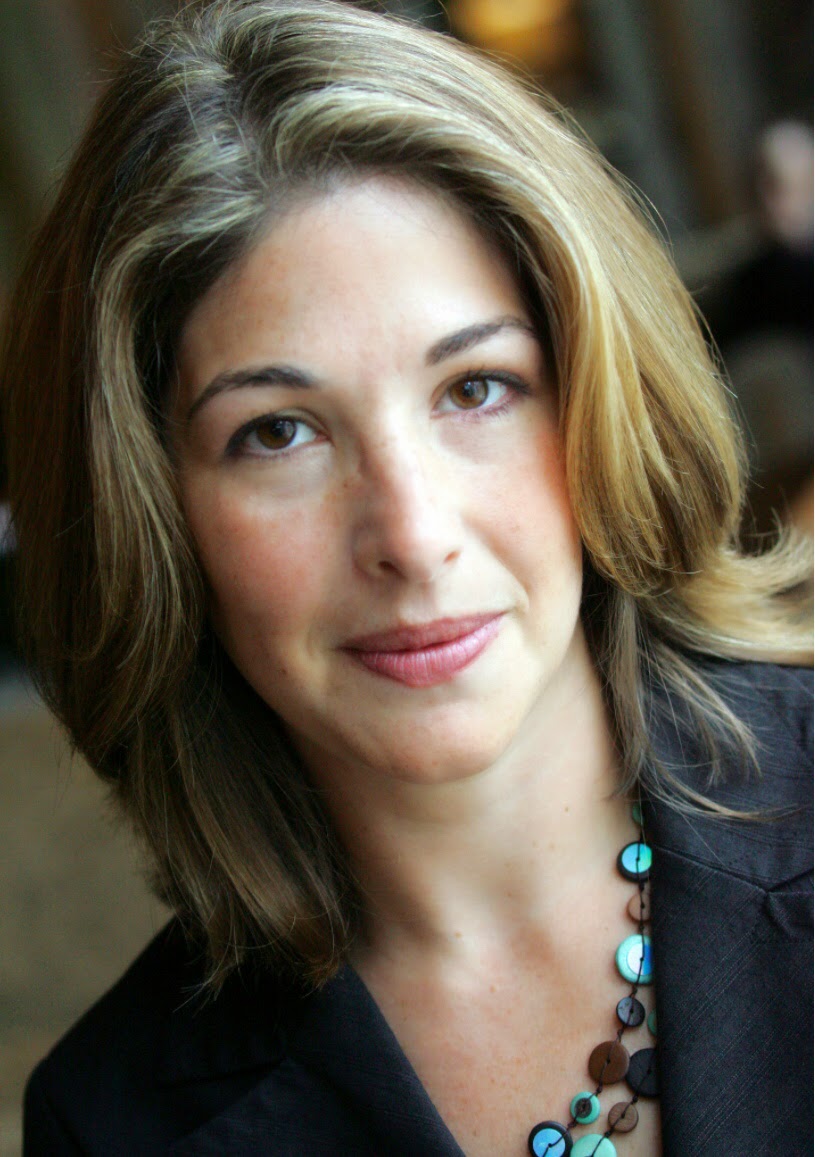
Naomi Klein

The threat he warned of was not climate chaos — barely a blip on anybody’s radar at the time — but the hydrogen bomb. The nuclear threat had a volatile urgency and visual clarity that the sprawling, hydra-headed menace of today’s climate calamity cannot match. How can we rouse citizens and governments to act for concerted change? Will it take, as Naomi Klein insists, nothing less than a Marshall Plan for Earth?

"This Changes Everything: Capitalism vs. the Climate" is a book of such ambition and consequence that it is almost unreviewable. Klein’s fans will recognize her method from her prior books, "No Logo: Taking Aim at the Brand Bullies" (1999) and "The Shock Doctrine: The Rise of Disaster Capitalism" (2007), which, with her latest, form an antiglobalization trilogy. Her strategy is to take a scourge — brand-driven hyperconsumption, corporate exploitation of disaster-struck communities, or "the fiction of perpetual growth on a finite planet" — trace its origins, then chart a course of liberation. In each book she arrives at some semihopeful place, where activists are reaffirming embattled civic values.

To call "This Changes Everything" environmental is to limit Klein’s considerable agenda. "There is still time to avoid catastrophic warming," she contends, "but not within the rules of capitalism as they are currently constructed. Which is surely the best argument there has ever been for changing those rules." On the green left, many share Klein’s sentiments. George Monbiot, a columnist for The Guardian, recently lamented that even though "the claims of market fundamentalism have been disproven as dramatically as those of state communism, somehow this zombie ideology staggers on." Klein, Monbiot and Bill McKibben all insist that we cannot avert the ecological disaster that confronts us without loosening the grip of that superannuated zombie ideology.

That philosophy — neoliberalism — promotes a high-consumption, carbon-hungry system. Neoliberalism has encouraged mega-mergers, trade agreements hostile to environmental and labor regulations, and global hypermobility, enabling a corporation like Exxon to make, as McKibben has noted, "more money last year than any company in the history of money." Their outsize power mangles the democratic process. Yet the carbon giants continue to reap $600 billion in annual subsidies from public coffers, not to speak of a greater subsidy: the right, in Klein’s words, to treat the atmosphere as a "waste dump."

So much for the invisible hand. As the science fiction writer Kim Stanley Robinson observed, when it comes to the environment, the invisible hand never picks up the check.

Klein diagnoses impressively what hasn’t worked. No more claptrap about fracked gas as a bridge to renewables. Enough already of the international summit meetings that produce sirocco-quality hot air, and nonbinding agreements that bind us all to more emissions. Klein dismantles the boondoggle that is cap and trade. She skewers grandiose command-and-control schemes to re-engineer the planet’s climate. No point, when a hubristic mind-set has gotten us into this mess, to pile on further hubris. She reserves a special scorn for the partnerships between Big Green organizations and Immense Carbon, peddled as win-win for everyone, but which haven’t slowed emissions. Such partnerships remind us that when the lamb and the lion lie down together, only one of them gets eaten.

In democracies driven by lobbyists, donors and plutocrats, the giant polluters are going to win while the rest of us, in various degrees of passivity and complicity, will watch the planet die. "Any attempt to rise to the climate challenge will be fruitless unless it is understood as part of a much broader battle of worldviews," Klein writes. "Our economic system and our planetary system are now at war."

Klein reminds us that neoliberalism was once an upstart counterrevolution. Through an epic case of bad timing, the Reagan-Thatcher revolution, the rise of the anti-regulatory World Trade Organization, and the cult of privatizing and globalizing everything coincided with the rising public authority of climate science. In 1988, James Hansen, director of NASA’s Goddard Institute, delivered historic testimony at Congressional hearings, declaring that the science was 99 percent unequivocal: The world was warming and we needed to act collectively to reduce emissions. Just one year earlier, Margaret Thatcher famously declared: "There is no such thing as society. There are individual men and women and there are families." In the battle since, between a collective strategy for forging an inhabitable long-term future and the antisocial, hyper-corporatized, hyper-carbonized pursuit of short-term growth at any cost, well, there has been only one clear winner.

But counterrevolutions are reversible. Klein devotes much of her book to propitious signs that this can happen — indeed is happening. The global climate justice movement is spreading. Since the mid-1990s, environmental protests have been growing in China at 29 percent per year. Where national leaders have faltered, local governments are forging ahead. Hundreds of German cities and towns have voted to buy back their energy grids from corporations. About two-thirds of Britons favor renationalizing energy and rail.

The divestment movement against Big Carbon is gathering force. While it will never bankrupt the mega-corporations, it can reveal unethical practices while triggering a debate about values that recognizes that such practices are nested in economic systems that encourage, inhibit or even prohibit them.

The voices Klein gathers from across the world achieve a choral force. We hear a Montana goat rancher describe how an improbable alliance against Big Coal between local Native American tribes and settler descendants awakened in the latter a different worldview of time and change and possibility. We hear participants in Idle No More, the First Nations movement that has swept across Canada and beyond, contrast the "extractivist mind-set" with systems "designed to promote more life."

One quibble: What’s with the subtitle? "Capitalism vs. the Climate" sounds like a P.R. person’s idea of a marquee cage fight, but it belies the sophistication and hopefulness of Klein’s argument. As is sometimes said, it is easier to imagine the end of the world than to imagine the end of capitalism. Klein’s adversary is neoliberalism — the extreme capitalism that has birthed our era of extreme extraction. Klein is smart and pragmatic enough to shun the never-never land of capitalism’s global overthrow. What she does, brilliantly, is provide a historically refined exposé of "capitalism’s drift toward monopoly," of "corporate interests intent on capturing and radically shrinking the public sphere," and of "the disaster capitalists who use crises to end-run around democracy."

To change economic norms and ethical perceptions in tandem is even more formidable than the technological battle to adapt to the heavy weather coming down the tubes. Yet "This Changes Everything" is, improbably, Klein’s most optimistic book. She braids together the science, psychology, geopolitics, economics, ethics and activism that shape the climate question. The result is the most momentous and contentious environmental book since "Silent Spring." More


Thursday, April 25, 2013

Pathways into the Future - Triggers of Change

The 2013 Earth Dialogues will attract leading figures of international politics, science, business and civil society in the search for solutions to resolve the most pressing and interconnected challenges of insecurity, poverty and environmental degradation.

The event is open to members of the public, who register with Green Cross following the guidelines found here.

The 7th edition of the Earth Dialogues will be held at the United Nations Office at Geneva, Switzerland, on 3 September, 2013. The day-long event, titled Pathways into the Future - Triggers of Change, comes at a time of deep crisis in multilateralism, hallmarked by a lack of consensus, and coordinated international action, to respond to rampant ecological breakdown, globalization and disparities between rich and poor.

The UN says clean energy funding too low to address climate change. http://buswk.co/12KfhH0 Clean energy is the future solution to our energy needs, and will be a key topic at the upcoming Earth Dialogues conference in Geneva on 3 September: http://bit.ly/15G7H2W

How can gains in human development be sustained, climate change controlled and sustainability ensured in the absence of a strong multilateral system that all decision-makers are party to?

The conference's objective will be to demonstrate how multilateralism can – and must – be recalibrated to meet these challenges. The event will provide a launching pad for initiatives to bolster effective multilateral action, and Geneva, the cradle for international modern consensus and cooperation, offers a perfect platform.

Five panels will be held during the Earth Dialogues conference on:

  • Lessons learned (from Rio 1992 to Rio+20)
  • Inclusive and Circular economy based Growth (In Search of a New Development Model)
  • Reinventing Multilateralism (Climate, Water/Energy/Food, Security) - two panels
  • Preparedness for the Future – Global and Local Resilience – Ability to Overcome and Reconsolidate Societal Functions after Major Shocks

The event will enable rich, valuable discourse and exchanges on critical issues and agendas facing the world today.

Discussions and decisions will go towards developing the “Geneva Appeal”, which will outline a road map of specific acitons and “tipping points” needed to launch the Future We Want movement, as outlined in the outcoome documentof the United Conference on Sustainable Development (Rio+20).

For more information: Please email earthdialogues@gci.ch or click here for registration details

Sunday, December 23, 2012

West Antarctic Ice Sheet warming twice earlier estimate

A new analysis of temperature records indicates that the Western Antarctic Ice Sheet is warming nearly twice as fast as previously thought.


US researchers say they found the first evidence of warming during the southern hemisphere’s summer months.

They are worried that the increased melting of ice as a result of warmer temperatures could contribute to sea-level rise.

The study has been published in the journal Nature Geoscience.

The scientists compiled data from records kept at Byrd station, established by the US in the mid-1950s and located towards the centre of the West Antarctic ice sheet (WAIS).

Previously scientists were unable to draw any conclusions from the Byrd data as the records were incomplete.

The new work used a computer model of the atmosphere and a numerical analysis method to fill in the missing observations.

The results indicate an increase of 2.4C in average annual temperature between 1958 and 2010.

“What we’re seeing is one of the strongest warming signals on Earth,” says Andrew Monaghan, a co-author and scientist at the US National Centre for Atmospheric Research.

“This is the first time we’ve been able to determine that there’s warming going on during the summer season.” he added.

Top to bottom

It might be natural to expect that summers even in Antarctica would be warmer than other times of the year. But the region is so cold, it is extremely rare for temperatures to get above freezing.

According to co-author Prof David Bromwich from Ohio State University, this is a critical threshold.

“The fact that temperatures are rising in the summer means there’s a prospect of WAIS not only being melted from the bottom as we know it is today, but in future it looks probable that it will be melting from the top as well,” he said.

Previous research published in Nature indicated that the WAIS is being warmed by the ocean, but this new work suggests that the atmosphere is playing a role as well. More


Monday, September 17, 2012

Arctic expert predicts final collapse of sea ice within four years

One of the world's leading ice experts has predicted the final collapse of Arctic sea ice in summer months within four years.

In what he calls a "global disaster" now unfolding in northern latitudes as the sea area that freezes and melts each year shrinks to its lowest extentever recorded, Prof Peter Wadhams of Cambridge University calls for "urgent" consideration of new ideas to reduce global temperatures.

In an email to the Guardian he says: "Climate change is no longer something we can aim to do something about in a few decades' time, and that we must not only urgently reduce CO2 emissions but must urgently examine other ways of slowing global warming, such as the variousgeoengineering ideas that have been put forward."

These include reflecting the sun's rays back into space, making clouds whiter and seeding the ocean with minerals to absorb more CO2.

Wadhams has spent many years collecting ice thickness data from submarines passing below the arctic ocean. He predicted the imminent break-up of sea ice in summer months in 2007, when the previous lowest extent of 4.17 million square kilometres was set. This year, it has unexpectedly plunged a further 500,000 sq km to less than 3.5m sq km. "I have been predicting [the collapse of sea ice in summer months] for many years. The main cause is simply global warming: as the climate has warmed there has been less ice growth during the winter and more ice melt during the summer.

"At first this didn't [get] noticed; the summer ice limits slowly shrank back, at a rate which suggested that the ice would last another 50 years or so. But in the end the summer melt overtook the winter growth such that the entire ice sheet melts or breaks up during the summer months.

"This collapse, I predicted would occur in 2015-16 at which time the summer Arctic (August to September) would become ice-free. The final collapse towards that state is now happening and will probably be complete by those dates".

Wadhams says the implications are "terrible". "The positives are increased possibility of Arctic transport, increased access to Arctic offshore oil and gas resources. The main negative is an acceleration of global warming." More


Saturday, April 21, 2012

Looting the Pacific: ICIJ investigation on BBC World News

Produced by London-based tve for BBC World News, "Looting the Pacific" features an International Consortium of Investigative Journalists' probe into the plundering of one of the world's last great fish stocks. Read the full investigation here: www.iwatchnews.org BBC World News will broadcast "Looting the Pacific" at the following times (all times GMT): Saturday April 21 at 9:30 am and 9:30 pm Sunday, April 22 at 2:30 am and 3:30 pm


Monday, April 2, 2012

We Need Many Strong, United Voices to Combat Climate Change

To deal with the threats and challenges of climate change we need solidarity. We need to recognize that no matter where we live, we are one people on a single planet, the only planet that we have. We need many strong voices speaking together -- the voices of people from all those regions that the 2007 IPCC IV Report identified as “vulnerable.”

by: Sheila Watt-Cloutier, Inuit environment, culture and human rights advocate, and former political leader, Ronald Jumeau, Seychelles Ambassador for Climate Change and Small Island Developing State Issues

We need the Arctic, where the rapidly melting multi-year sea ice is just one symptom of massive changes now underway. We need the small island developing States (SIDS) like Tuvalu, Barbados and Seychelles whose homes are threatened with inundation. And we need voices of people who live in high mountain regions, on deltas and in the vast Savannah of the Sahel.

We need many strong voices, united in their resolve to defend human rights and determined to see their cultures survive and thrive.

Twenty years. That's how long we have both petitioned the world community to save our lands, our peoples and ways of life. We have done so in every conceivable manner and with ever-increasing urgency. Twenty years ago, when we began to experience climate change in our lands and communities, we began to worry that our children would no longer grow up in a safe and nurturing environment. We worried too that our ancient cultures, deeply connected to our lands, might not survive into future generations. Today, our children now experience those changes with us every day, and join in the appeal for future generations.

It is hard to imagine us coming from more different backgrounds: one from a balmy archipelago in the Indian Ocean and the other from the cold expanse of the northern tundra. Yet today we join with our brothers and sisters from other islands and polar regions through the Many Strong Voices programme[3] — a network of individuals and communities in the Arctic and SIDS connecting for strategic action on climate change mitigation and adaptation. We reiterate our unequivocal appeal: The world must take action now to stop climate change and address the damage already done.

Now as we approach the 20th anniversary of the United Nations Framework Convention on Climate Change (UNFCCC), we are running out of time. Last year’s climate change negotiations in Durban produced an agreement to adopt a binding legal agreement on climate change “as soon as possible, and no later than 2015.”[4]

We heard this kind of pledge leading up to the 2009 negotiations in Copenhagen that produced little of substance. Indeed, at the time the fact that the negotiation process itself lived on was heralded as a major victory.

Not to us.

As climate science has advanced, we now know the consequences of the world’s unwillingness to act. Even once the world agrees to stabilize and reduce greenhouse gas (GHG) emissions, warming from gases already in the atmosphere will tragically affect the most vulnerable regions of our planet. Sadly, as we have seen in places such as the Pacific island of Kiribati and the Alaskan community of Shishmaref, it may already be too late.

Even if the world forges an agreement three years from now, it will be very difficult to make the deep GHG emissions reductions that hundreds of scientific studies tell us -- clearly -- that we need to make in order to keep the world’s global average temperature from rising 2ºC above pre-industrial levels, let alone the 1.5ºC that the SIDS and a majority of the countries that have signed the UNFCCC are calling for. And we need to make sure that the rising line of emissions starts to bend down as 2020 dawns or it may be too late for our peoples and lands.

The impacts of climate change may be affecting small island states and remote Arctic communities with small populations, but they are also affecting hundreds of millions of people in the Ganges, Indus, Yangtze and other river systems dependent on glacial water for agriculture and drinking. If you look at it this way, the majority of the world’s population is experiencing the effects of climate change now.

Let’s be clear. This isn’t a numbers game. Article 3 of the UNFCCC clearly states that countries “should protect the climate system for the benefit of future and present generations of human kind on the basis of equity and in accordance with their common but differentiated responsibility and respective capabilities.” This means “developed countries should take the lead in combating climate change and the adverse effects thereof.” We haven’t seen much of this leadership in the negotiating process.

Other major emitters and emerging economies cannot afford to continue with business as usual.

Now, as the world approaches the 20th anniversary of the Rio Summit where the UNFCCC was negotiated, much attention is being placed on how to achieve a sustainable future. We would like to point out that our peoples have overcome innumerable challenges to thrive in our Arctic and island communities for hundreds and thousands of years. Our cultures are sustainable. But recently, our elders have been warning us that the changes we witness are unprecedented in our histories. They see our ice melting and our seas rising and are very concerned about how the next generation will thrive in the rapidly changing lands of our ancestors. If we lose our ice and our lands, we lose our cultures — some of the richest on Earth.

Our primary objectives are clear: reduce global emissions to avoid catastrophic warming while recognizing common but differentiated responsibilities between countries; ensure adequate adaptation measures are taken in areas facing the adverse effects of climate change now and in the future; and include human rights protections in the final agreement.

If we can achieve these goals, it will mark a watershed in humankind's ability to look beyond immediate and parochial interests and to reconnect as a shared humanity. It isn’t that complicated. All it takes is for us to recognize our common interest and that we are all here on this planet together. More


For more information visitwww.manystrongvoices.org or contact John Crump (john.crump [at] grida.no).


[1] Sheila Watt- Cloutier is an award winning Inuit environment, culture and human rights advocate and former political leader who was nominated for the Nobel Peace Prize in 2007.

[2] H.E. Ronald Jumeau is the Seychelles Ambassador for Climate Change and Small Island Developing State Issues.

[3] www.manystrongvoices.org

[4] http://unfccc.int/meetings/durban_nov_2011/meeting/6245.php


Thursday, March 1, 2012

Many Strong Voices Launches New And Updated Web Site

Many Strong Voices (MSV) has just launched its new web site, which has been revised and updated. There are sections with downloadable materials -- publications, posters, postcards, etc. -- which you should feel free to use. We will shortly about linking to other projects and material as well. Click Here